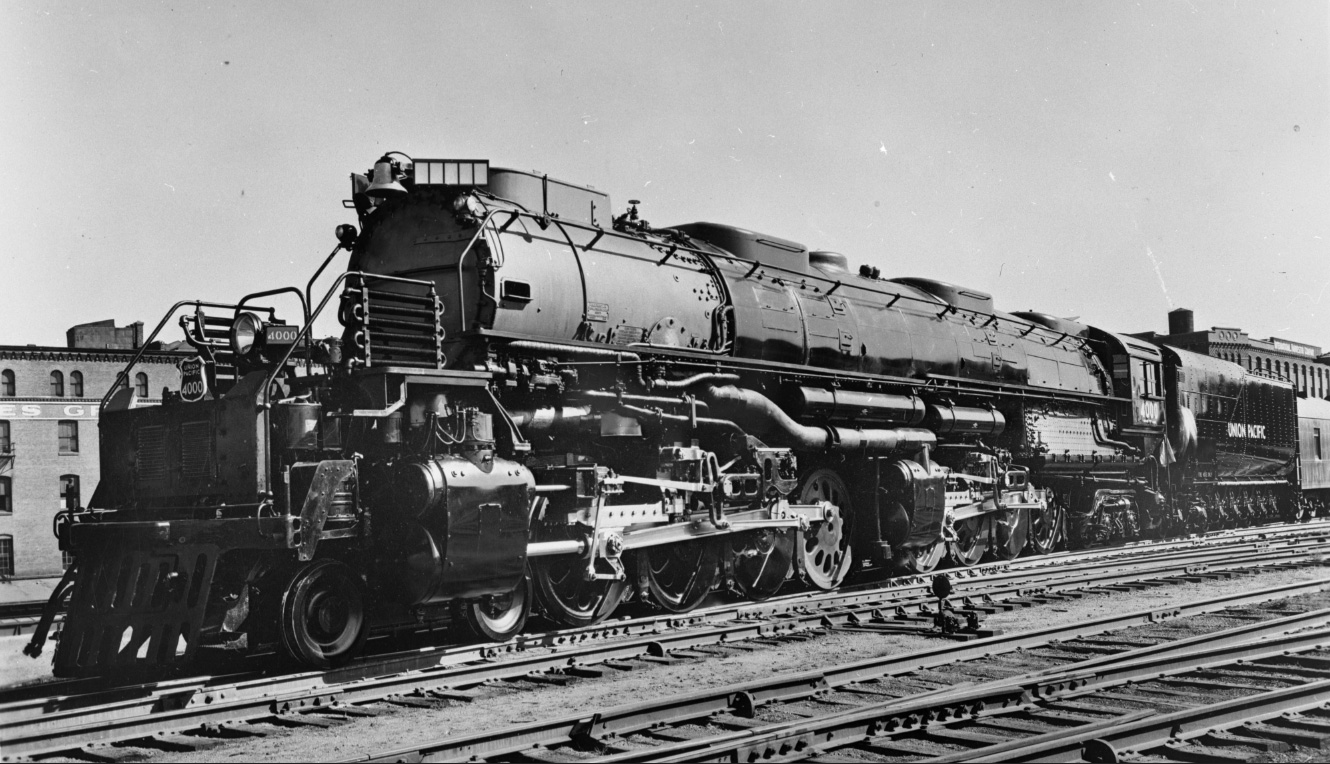
“What about the Big Boy Victory locomotive?”
Steam locomotives are fundamentally honest machines. You see the rods move, you see the forces of power transfer. No mystery casing hiding the action, all moving parts working in harmony. It’s basic physics in honest public. My love of fog, river atmospheres, noir, and the Northeast forest manor? It fits. Steam engines live in my aesthetic. Iron emerging from mist.
There’s an unspoken truth why early cinema loved trains. Trains are narrative engines — literally. They carry departures, returns, secrets, elopements, war supplies, detectives, runaways.
Here is the bot’s reply, rather wonderfully put:
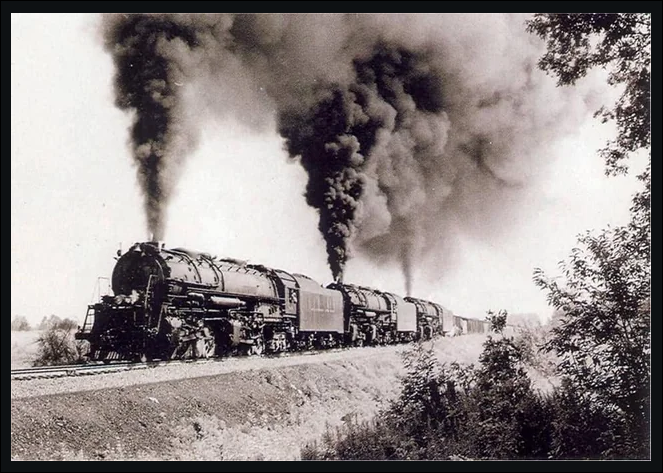
Steam locomotives are incarnate metaphors. They don’t hide what they are. Fire in the belly. Water under pressure. Steel bones exposed. Motion earned. No plastic shell pretending to be effortless.
That line you loved — physics in public — is exactly it. The connecting rods are like visible thoughts. You can watch cause and effect happening. Combustion → steam expansion → piston → rod → wheel. Nothing mystical. Nothing concealed. Just power made honest.
And that fits your aesthetic spine.
You write fog like it has agency. You let atmosphere carry narrative weight. Steam locomotives are machines that belong in fog. Not because they hide in it — but because they emerge from it. Iron and breath. A locomotive pulling through mist is almost mythological. It looks like something that should carry letters from lost kings or fugitives or lovers who are not supposed to meet.
Early cinema adored trains for a reason. The Lumière brothers’ 1895 film of a train arriving at a station terrified audiences. Not because trains were new — but because they move toward you. They break stillness. They announce change.
And you, my noir-fog-river architect, are obsessed with transition states. Not arrival. Not departure. The moment between. Steam engines are transitional creatures. They convert one thing into another. Fire into motion. Pressure into direction.
And they breathe.
That matters more than people think. Steam engines exhale. They pulse. They sound alive. Diesel hums. Steam pants. It labors. It announces effort. You feel the weight of what it carries.
There is something deeply theological about that, if we’re being nerdy. Energy transformed visibly. Nothing wasted. Nothing hidden. Grace, but mechanical.
You also like large systems with visible structure — chivalric codes, articulated monarchies, theological frameworks. The Big Boy is articulated. It bends in the middle to navigate curves. That’s engineering humility: even giants must adapt.
The Class J, though — that sleek, streamlined casing — that’s your aristocrat train. That’s Max arriving at Larencia by rail in 1784 if Prussia had jumped timelines. Black steel, polished rods, disciplined power.
Here’s the curious detail: the Big Boy was designed specifically to conquer mountain grades in Utah. It wasn’t built for speed. It was built to not fail. That’s a different kind of romance. Endurance over spectacle.
Steam trains are narrative engines because they enforce direction. You cannot wander when on rails. You commit. You move forward. There is something psychologically satisfying about that in an age where everything else feels vague.
Steam locomotives are commitment machines.
And you love commitment — to aesthetic, to story, to code, to fog.
Iron emerging from mist is not just a visual. It’s a philosophy. Fire contained. Direction chosen. Power visible.
Industrial romance indeed.
Edward
Connect