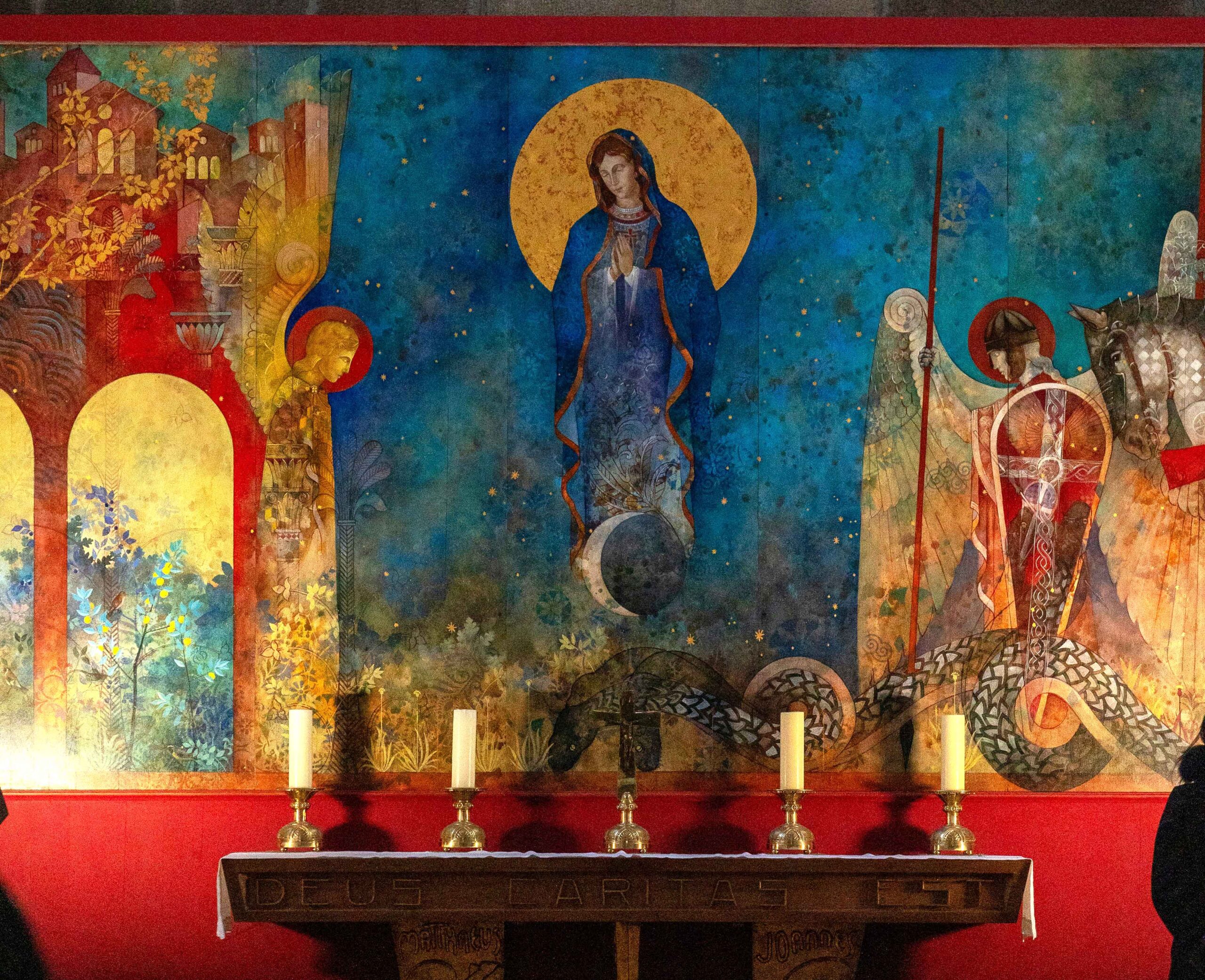
Catholic Romanticism1 Romantic Catholicism; refers to a 19th-century tendency within the broader European Romantic movement that fused Romantic ideals—emotion, imagination, subjectivity, medieval revival, nature’s sublimity, and a yearning for the infinite—with Catholic theology, aesthetics, and tradition. It was not a rigid, separate “school” like German or Italian Romanticism but a cultural and religious current that often served as a counter to Enlightenment rationalism, secularism, and (in some cases) Protestant individualism. Romantics in this vein saw Catholicism as a rich source of mystery, sacramentality, community, and historical depth, using art and literature to defend or revive faith in an age of revolution and disenchantment.
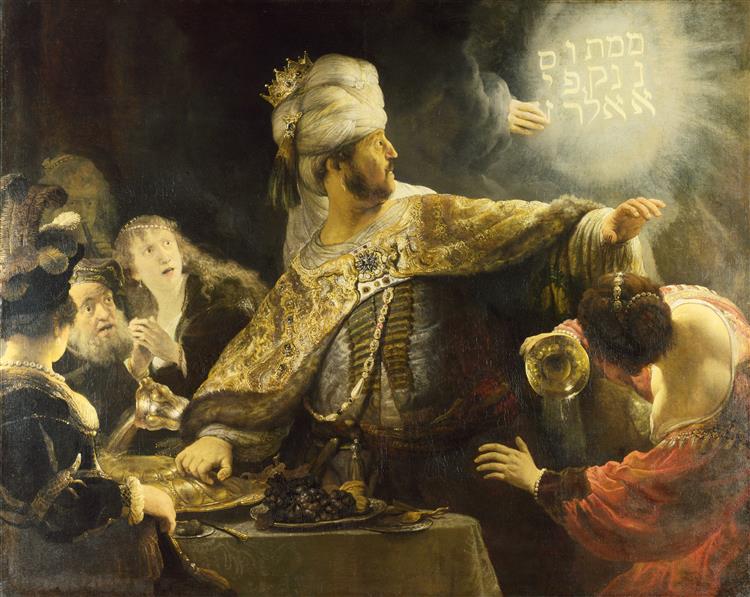
Rembrandt H. van Rijn “Belshazzar and the writing on the wall.” 1606
Catholic Romanticism was a cultural and artistic current within the broader Romantic movement that blended Romantic ideals—emotion, imagination, medieval revival, the sublime, and a yearning for the infinite—with Catholic theology, sacramentality, and tradition.
Author
It emerged in the early 1800s as part of Romanticism’s reaction against the Age of Reason, the French Revolution’s anti-clericalism, and industrialization. While Romanticism broadly emphasized passion over logic and the individual over convention, the Catholic variant grounded these in objective doctrine, the Church’s liturgy, and medieval/baroque heritage rather than pure subjectivism or pantheism. Catholic thinkers often admired its anti-rationalist energy but critiqued its potential for emotional excess or moral relativism.
Relation to German Romanticism
German Romanticism (especially the early Frühromantik or Jena phase, ~1797–1802, and its later developments) had a particularly strong “Catholicizing” strand, which helped birth what scholars call Catholic Romanticism. Early German Romantics like the Schlegel brothers, Novalis, and Tieck revived medievalism, folklore, and mystical unity of art/religion/philosophy as an antidote to Enlightenment fragmentation. Many key figures converted to Catholicism, seeing it as the embodiment of organic tradition, the sublime, and an “enchanted” worldview against Protestant rationalism and modernity:
- Friedrich Schlegel (a founder of Jena Romanticism and Athenaeum journal) converted in 1808 in Cologne with his wife Dorothea; he later served in Austrian diplomacy and promoted Catholic traditionalism.
- Poet Clemens Brentano joined Catholic Romantic circles in Vienna around Redemptorist priest Clemens Maria Hofbauer (alongside the Schlegels, Joseph von Eichendorff, and others). Brentano transcribed the mystical visions of stigmatic nun Anna Katharina Emmerick (1818 onward), blending Romantic poetry with baroque Catholic miracle and the supernatural.
- Other converts included playwright Zacharias Werner. This created a “cultural symbiosis” between post-Jena Romanticism and ultramontane/baroque Catholicism, producing “Romantic Catholicism” (Catholics using Romantic forms) and “Catholic Romanticism” (Romantics embracing the Church).
In visual arts, the Nazarene movement (Lukasbund, founded 1809 in Rome by German painters like Friedrich Overbeck and Franz Pforr) rejected neoclassicism for medieval/Renaissance Catholic-inspired frescoes and a quasi-monastic life, influencing religious art across Europe.
German Romanticism’s Catholic turn was sometimes criticized (e.g., by Heinrich Heine) as reactionary sentimentalism, but it profoundly shaped 19th-century Catholic mysticism, theology, and resistance to modernity. It differed from more secular or nature-worshipping strains by anchoring the infinite in Church doctrine rather than pantheism.
Relation to Italian Romanticism
Italian Romanticism (roughly 1810s–1830s) was more politically charged, tied to nationalism and the Risorgimento (unification movement), and often more moderate than its German or English counterparts. It rejected classical mythology, rigid unities, and imitation of ancients in favor of history, emotion, and contemporary relevance—but under Catholic authors like Alessandro Manzoni, it became a distinctly Christian/Catholic form of Romanticism.
Manzoni (1785–1873), one of the “three crowns” of Italian Romanticism alongside Ugo Foscolo and Giacomo Leopardi, returned to Catholicism around 1810 after Enlightenment influences. His major works exemplify Catholic Romanticism:
- I Promessi Sposi (The Betrothed, 1827/1840) is a historical novel blending Romantic elements (humble folk’s struggles, Providence, moral drama) with Catholic ethics, social reform, and historical accuracy. It focuses on the “masses” ignored by traditional history, irony/humor, and a Christian hero (not titanic rebel). It helped standardize modern Italian and inspired national identity.
- In his 1823 Letter on Romanticism, Manzoni endorsed core Romantic critiques (no classical myths, no slavish rules) but rejected Northern European excesses (fantasy, exoticism, titanism). He fused Enlightenment progressivism with Catholic morality for a “moderate” Christian Romanticism.
His tragedies (Il Conte di Carmagnola, Adelchi) and sacred hymns further wove patriotism, history, and faith. Italian Romanticism thus channeled Romantic emotion and individualism into Catholic social justice and national revival, less mystical/subjective than German variants and more grounded in realism and ethics.
Broader Context and Legacy
Catholic Romanticism also had strong French roots via François-René de Chateaubriand’s Genius of Christianity (1802), which used Romantic prose to portray Catholicism’s poetic, cultural, and emotional “genius” (Gothic architecture, rituals, nature as sacramental) against Enlightenment attacks. It influenced European Catholic revival and Romantic writers across borders.
Spanish Romanticism and Catholicism
Spanish Romanticism (roughly 1830s–1850s) arrived later than in northern Europe and was heavily shaped by Spain’s political turmoil (liberal vs. absolutist struggles, Carlist wars, and the legacy of the Peninsular War against Napoleon). It was less a unified movement and more divided between liberal/exotic strains (influenced by French and English models, with passion, individualism, and historical drama) and moderate/traditional ones that exalted Catholic values, monarchy, and Spanish national identity.
- Catholicism was deeply woven into Spanish culture as “throne and altar” traditionalism. Many Romantics idealized medieval Spain, chivalry, and the Reconquista as organic, faith-driven expressions of the national spirit—mirroring broader Romantic medievalism. Foreign Romantics (especially Germans) viewed Spain itself as a Romantic ideal: a land of passion, honor, piety, and Moorish exoticism untouched by cold Enlightenment rationalism.
- Key figures in the conservative/moderate camp included:
- Juan Donoso Cortés (1809–1853): Started as a liberal but shifted to staunch Catholic authoritarianism. His Ensayo sobre el catolicismo, el liberalismo y el socialismo (1851) defended Catholicism against modern ideologies in a grand, rhetorical style that blended Romantic solemnity with counter-revolutionary thought.
- Jaime Balmes (1810–1848): A priest and philosopher who championed conservative Catholic positions, often in dialogue with liberal ideas.
- Novelists and poets in the moderate school sometimes produced works celebrating traditional Catholic morality and Spanish customs against liberal secularism.
- Earlier influences included Juan Nicolás Böhl de Faber (a Prussian Catholic convert and father of Fernán Caballero), who promoted a more Catholic, folkloric, and anti-liberal Romanticism in Andalusia and Catalonia.
- Overall, Spanish Romanticism had a strong Catholic dimension in its traditionalist wing—emphasizing history, legend, and national piety—but it was more politically polarized and less mystically subjective than German Catholic Romanticism. Liberal Romantics could be anticlerical, while conservatives used Romantic emotion to bolster “National Catholicism” (a theme that echoed into the 20th century).
Spanish Romanticism was thus “Catholic” in a cultural and ideological sense more than a purely artistic or philosophical one, often serving as a defense of tradition amid modernization.
English/British Romanticism and Catholicism
In Protestant Britain, “Catholic Romanticism” was not a dominant movement but appeared in subtler, often conflicted ways. The era coincided with intense debates over the “Catholic Question”—the push for Catholic Emancipation (achieved in 1829), which raised fears about national identity, papal influence, superstition, and Irish loyalty. Many Romantics engaged these issues, viewing Catholicism ambivalently: as a picturesque medieval remnant, a source of sublime mystery, or a political threat.
- Romantic writers frequently romanticized England’s Catholic past (abbeys, Gothic ruins, medieval chivalry) while remaining Protestant or skeptical. Examples:
- Sir Walter Scott‘s historical novels (Ivanhoe, etc.) portrayed Catholic elements nostalgically, influencing later Catholic thought and even being interpreted as embodying a “Catholic romanticism” in some analyses.
- Poets like Wordsworth explored sacred spaces and “regulated superstition” in works like Ecclesiastical Sketches, sometimes aestheticizing Catholic history without endorsing it.
- Byron and Shelley showed sympathy for emancipation but with reservations; Keats visited Wordsworth during anti-Catholic campaigning.
- There was no major wave of Romantic conversions to Roman Catholicism in the core Romantic period (unlike Germany). Instead, Catholicism appeared as:
- A foil in national identity debates (Protestant via media vs. “enthusiasm” or “tyranny”).
- Aesthetic inspiration: Gothic revival, medievalism, and the sublime drew on Catholic heritage (e.g., ruins, rituals).
- The real flowering of Catholic influence came slightly later, feeding into the Oxford Movement (1830s onward) and Anglo-Catholic revival within the Church of England. Figures like John Henry Newman (who converted to Rome in 1845) bridged Romantic sensibility with Catholic theology. Later 19th–20th-century British Catholic converts (Chesterton, Waugh, Hopkins, etc.) built on Romantic legacies, but that’s post-Romantic.
British Romanticism engaged Catholicism more as a cultural/political “question” than as a embraced faith tradition. It lacked the conversions and mystical circles of Germany but contributed to a broader “unsecularizing” or religiously complex view of the era.
In summary and in comparison with the broader picture:
- Germany: Strongest Catholic Romanticism—conversions (Schlegel, Brentano), Nazarene art, mystical visions, explicit fusion of Romantic imagination with baroque/ultramontane Catholicism.
- Italy: Moderate, ethical, and national (Manzoni).
- Spain: Traditionalist and national-Catholic, politically charged, with conservative Romantics defending faith and monarchy.
- England/Britain: Ambivalent and aesthetic/political; more nostalgia for Catholic history than active embrace, amid Protestant dominance and emancipation debates.
Together, they formed a pan-European Catholic Romantic current that reclaimed emotion and beauty for the faith, aiding 19th-century revivals while navigating tensions with orthodoxy
It left a legacy in literature, art, and even later Catholic thought.
⁜
Connect